JST FOREST Programme Selects Associate Professor Ren Togo’s Project “Creating the Foundational Theory of Observation Design Intelligence”
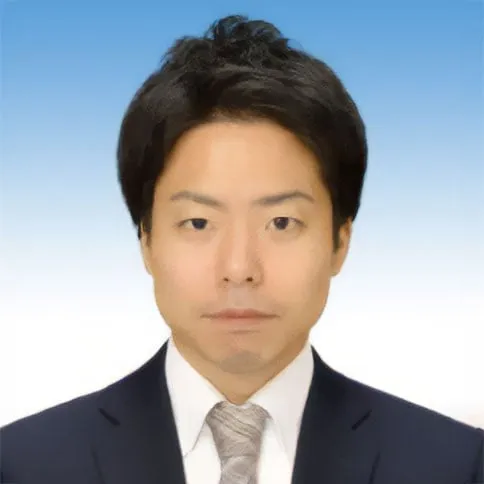
The research project “Creating the Foundational Theory of Observation Design Intelligence”, with Associate Professor Ren TOGO (Faculty of Information Science and Technology, Hokkaido University) of the PRISM-HU Imaging and Clinical Research Team as principal investigator, has been selected as a new FY2026 research project of the Fusion Oriented REsearch for disruptive Science and Technology (FOREST) programme of the Japan Science and Technology Agency (JST).
FOREST is a JST programme that supports free, challenging and interdisciplinary research unconstrained by existing frameworks, without setting specific themes or short-term goals, for seven years in principle (up to ten years, subject to a stage-gate review). Including the securing of an environment in which researchers can concentrate on their research, it is one of Japan’s leading large-scale schemes for the long-term support of early-career researchers, and selection is a great honour for a researcher.
For FY2026, 2,519 proposals were submitted from across Japan, and after document and interview screening only 243 were selected, a selection rate of about 9.6%. Having come through this highly competitive process, Associate Professor Togo now takes the first step of a research programme that looks ahead up to ten years (announced 27 October 2026).
A Challenge Supported by Medicine–Engineering Collaboration
Associate Professor Togo conducts research on image and video recognition using multimodal AI in the PRISM-HU Imaging and Clinical Research Team. PRISM-HU promotes integrated research linking basic medicine, clinical medicine and information science, and day-to-day collaboration with medical researchers underpins the concept of the newly selected project. The selection is expected to further advance contributions to clinical practice through medicine–engineering collaboration.
That such a challenging project by one of PRISM-HU’s early-career principal investigators has been selected is a great encouragement for the programme as a whole. Our warmest congratulations to Associate Professor Togo.
Comment from Associate Professor Togo
I am deeply honoured that “Creating the Foundational Theory of Observation Design Intelligence” has been selected for the JST FOREST programme. This research aims to build a mechanism in which AI itself works out “how to observe”: what should be measured, and how. As a medical application, we envisage CT examination. Rather than an AI that reads images once they have been taken, it is an AI that works out how the scan should be taken so that lesions become visible, making visible what could not be seen before. By having AI automatically determine imaging conditions such as X-ray intensity and beam angle for each individual patient, we hope to reduce radiation exposure and achieve more accurate diagnoses.
Collaboration with medical researchers through PRISM-HU has been a major support for this concept. We will continue to pursue research aimed at contributing to clinical practice through medicine–engineering collaboration.
Project Details
- Programme: JST FOREST (Fusion Oriented REsearch for disruptive Science and Technology), new FY2026 projects
- Project title: Creating the Foundational Theory of Observation Design Intelligence
- Principal investigator: Ren TOGO (Associate Professor, Faculty of Information Science and Technology, Hokkaido University / PRISM-HU Imaging and Clinical Research Team)
- Research period: seven years in principle (up to ten years, subject to a stage-gate review)
- Panel: Aizawa Panel (Programme Officer: Professor Akiko Aizawa, National Institute of Informatics)
- Announced: 27 October 2026